Thank you for tuning into my blog. life is stressing me out. i can't for the life of me sit and not mindlessly go on my phone. i have tried to organize this blog into sections because multiple editions have been melded together into this one super-edition.
Watching
Local Bird Hitting the Silver Screen: how does this lovely local news story have less than 2000 views. Please watch the story of this sweet man Donovan Meeks and his birds.
Conner O'Malley: Stand Up Solutions : Real ones introduced me to Conner O'Malley in college as the Chicago comedian's compilation of insane Vines blew up, which preceded our devoted watching and rewatching and quoting of his and Carmen Christopher's Wrigleyville Playboys series. In this special, Conner O'Malley lays it all out - the bits, gags, goofs, screams he learned to reliably churn out on Chicago stages (like at the Annoyance (!!)) are shown here in perfect form. I know O'Malley's screams can be stomach-turning for some viewers, and/or his LOUD tone of voice can be grating. But as anyone who has sat through an improv/sketch comedy show can quickly recognize - this is less grating because it is good. The bits are well constructed and well written and O'Malley's character work is impeccable.
This is not your typical stand up special where Conner O'Malley does jokes for the crowd standing up. It's more a one-man show like you would see at one of those big comedy festivals (or somewhere else when trying to get into one of those festivals). O'Malley becomes Richard Eagleton, a character who speaks the full gamut of languages O'Malley is fluent in: Chicago suburbs-specific aggrieved white guy insecurity, near-conspiracy Wikipedia knowledge, dumb guy Instagram ad masculinity capitalist life optimization. O'Malley knits his skills in directing and assembling animated shorts and cut-aways, scripted powerpoint comedy, and in-character crowd work together into this special that I think can be considered defining of the alt-comedy scene that clawed out of Chicago and into NY and LA over the last decade.
My take-aways: this special is better than most stand up specials because the content is so prescient. In the back half are nods to subjects familiar to the super-online, but not in the wider consciousness: that all of our data is being sucked up by advertisers (and worse), that tech overlords in Palo Alto decide what the borders on maps look like in different places (and also what we can see on those maps) defining the literal boundaries of our lives for us, that richer smarter people than we can even imagine are creating a world for the rest of us that alienates people from their loved ones with tools like online casinos and the proliferation of easy entry into oppressive debt, porn, and violence - real and imaginary, constantly in front of us - all to enrich themselves beyond dreams. He's playing an idiot, but the joke is not entirely on him - it's also on the very real guys Richard Eagleton wants to be. O'Malley the elder millennial (age 38) is part of the first generation of people to see sex and death on video become free pop culture while an elite business class ran away with everything good in the world and all the money, and he is setting the tone for younger comedians who want to turn their own experiences of the peculiarly fucked up existence of the online and young into humor.
And takeaway 2, he didn't do it alone. This special clearly took a ton of work to assemble from (hilarious) guest spots to VFX. The director, Harris Mayersohn, clearly loves comedy and working together to make great comedy, and it shows here. Making something this good wouldn't be possible if O'Malley did it all himself, and he remains an inspiration to me for the way his projects grow out of friendships and mutually-beneficial collaboration. Going back to earlier issues you will find my love for collaboration also noted in words about IRAK NYC. It takes a village to raise children, and that includes nursing art babies into grown art children. I encourage those of you reading (or writing this) who may be plotting greatness of their own to think often about the impact we can have on one another and to spend more time with other people making each-other better. Watch the special by clicking through the age-filter below
CHAOSTOWN S1 FINALE: Portland is losing the 'graffiti war'
A recent trend in the graffiti world in Chicago have been pieces done (perhaps most notably or numerously by ZWON) in seemingly impossible places off the sides of buildings dozens of feet off the ground. All graffiti is magic - the viewer can only wonder and guess how the artist made it appear. But these levitation acts are show-stoppers. The secret (as revealed in the video below): basic rappelling techniques you can learn at any climbing gym, and the balls to trust in what you tie your rope to, and yourself, to stay alive.
CHAOSTOWN (the youtube channel) feels like a daisy on the grave of VICE. The recipe for good, interesting, fresh documentary content was put out there whether the current vulture owners of the defunct site like it or not. It never took a ton of people to make the VICE stuff, this video has a total credit list of 10. What you need are connections to subcultures (and the ability to make them) - and getting tied in with a teenager who dangles off bridges for hours to paint their pseudonym is not a skill "people who buy media companies" have, it's one they have to pay people for.
That's not the only awesome interviewee in this episode. They meet with an 84 year old vigilante who paints over graffiti wherever he sees it, and contrast his approach with that of the owner of a graffiti removal company that specializes in a spotless approach. Another graffiti writer posits that the Portland graffiti explosion is the result of Fentanyl and the ensuing degradation of the social contract in the city as people died horrible, preventable deaths while the state criminalized and ostracized them. The graffiti of those who have died is their own memorial of themselves, and the writer expresses his disgust at the millions the city is bookmarking to erase just some of those marks.
Reading
On Politics and Government
The Big Con - Mariana Mazzucato and Rosie Collington
Remember this deep cut from Blog #1? I said I had picked it up (8 Jan 24). I finished it at the beginning of May while on vacation. Now here's my review!
Actually, first you should read the Goodreads reviews. Consultants hate this book! Why? It lays bare the fundamental issues with consulting - the way the system is built from the ground up to produce unaccountable interest-conflict behemoths of "expertise" that "infantilize" the organizations and governments that employ them. Consultants laid the groundwork to poison organized labor in America, to gouge the world's populations for health care, to pump opioids, for every financial crisis. It's a system that has destroyed the middle class for the benefit of a very small group of people, making the world a more precarious place for the rest of us as our governments lose or fail to develop capabilities.
Consulting firms provide managers in public and private institutions with cover for their decisions: decisions that enrich themselves and the consultants at the expense of every other stakeholder involved. The dagger in the heart of the book comes at the end, when the authors turn to ESG consulting - the greenwashing work being done today to ensure oil companies get to keep pumping oil (sustainable! with women and minorities on the board!). I found it difficult to come away from this book with any respect left for the consultant cheerleaders, inside and outside of the firms mentioned in the book, that advocate for our businesses and governments to take bad medicine from the witch doctors at McKinsey et al.
Mazzucato and Collington say what is unsayable in Washington D.C. (and London, and Paris, etc) in this book: that the big consultancies and prime contractors we have let take over our governments like parasitic brain fungus are leeches to be salted.
 Santi Ruiz
Touched upon in The Big Con is the bungled implementation of Obamacare. You may remember the website launch that went worse than pretty much any other website launch ever. Sources differ, but a website intended to help millions of Americans get healthcare helped less than 10 people the day it launched. This interview by Santi Ruiz, once a UChicago grad turned American Enterprise Institute freak, now the head newsletter guy at the Institute for Progress, one of those "definitely nonpartisan" groups in Washington funded by mysterious big philanthropy (among others in this case, the youngest-ever-billionaire brother founders of Stripe). The Institute for Progress, says Wikipedia, exists to "bring ideas from effective altruism and progress studies to policymakers". You may remember effective altruism as the guiding light of crypto scam artist Sam Bankman-Fried.
The Institute for Progress employees are all ex-haunts of Republican intellectual laundering institutions like AEI, if that tips you off. The idea with this sort of play is: rich powerful people want to launder their ideas about how the future should be into the political sphere. To do this, they pay a bunch of slimy people who make their bones writing BS to generate justification for the implementation of their ideas via a "non partisan policy think tank". To some degree, everyone doing this sort of work at think tanks believes in their side of things. A more Adam Curtis view is: everyone doing this sort of work is only allowed to do it if they can credibly demonstrate they "believe" in it. Why is Santi Ruiz writing this newsletter? Is it to make government better in the ways Santi Ruiz, independent thinker, believes it ought to be better? No - it is because he collects a paycheck like you and me for this work, a paycheck signed by rich people who are determined to "make the world a better place", at no significant cost to themselves, and in their image. So when Santi Ruiz brings up a Catholic Philosopher "who a bunch of [his] friends are interested in" - keep in mind who the friends are he's talking about. These people are in bed with the people who want to ban abortion and gay marriage and trans people generally, cut all taxes and slim the government down to a computer they built.
The interviewee, Jen Pahlka, founded Code for America (on Code for America working with the Department of Defense in 2018, Pahlka said "But having poor tools doesn’t make us fight less; it makes us fight badly.") the non-profit focused on fixing tech for government in America. Jen Pahlka, in other words, was doing the bidding of a big group of rich people in Silicon Valley.
That disclaimer given, this interview is a good follow-on perspective to that of the authors of The Big Con. It details how broken the federal hiring process is at every level, how crappy we are at implementing changes that would make for better results and less red tape in government processes, and in relation to The Big Con, how the good-natured people in consulting organizations and the consultancies themselves are disconnected - the individuals want to do good, the big organization wants to make money. This is obvious if you read the Big Con: consultancies have huge incentive to not help their clients achieve their goals, but to shuffle and drag their feet as much as possible once a big fat contract is awarded while providing enough semblance of competency and diffuse responsibility as to not impact the firm's overall credibility. If you want a job done right, you gotta do it yourself.
 Gil Duran
Did you need more evidence the Silicon Valley people may not have politics that align with yours? Taking "if you want a job done right" to it's logical end: Balaji proposes the right-minded "grays" of tech and republican "reds" team up to keep the "blues" out of the society of the future they will build. It's autocratic, and it's based around a world that caters to these people's ideas of themselves: elevated above the rest of us by virtue of superior genetics, they seek now to create a world where they and their sycophants (and police protection) live separately from the rest of us. You know, like Hitler's Germany did with the Jews. Or Bibi's Israel is doing with Gaza.
 Contributors to Wikimedia projects
Speaking of creating a better world for you and your people, separated by high walls from the ugliness outside, welcome to Bolinas, California! Have you ever been to Marin County, California? No? Good! The people who live there would like to keep it that way! Forever! It's good real estate because people like you don't go there! Ever!
Bolinas voted in the 70s to restrict new permits for water and sewer service, ending new construction. For decades, Bolinas residents have taken down the signs put up on the county road telling people where to turn to get to town. Like the Bohemian Grove up north a ways, Bolinas is administered by a small group of highly interested parties negotiating over decades with California county authorities to maintain for themselves spots of natural beauty by privilege written and unwritten into the laws of the land. If you mess with the natural order of things either in Bolinas or in the Bohemian's Nest, you will be dealt with by county police and county prosecutors ready to inform you of the way things really work around those parts.
 Erin McCormick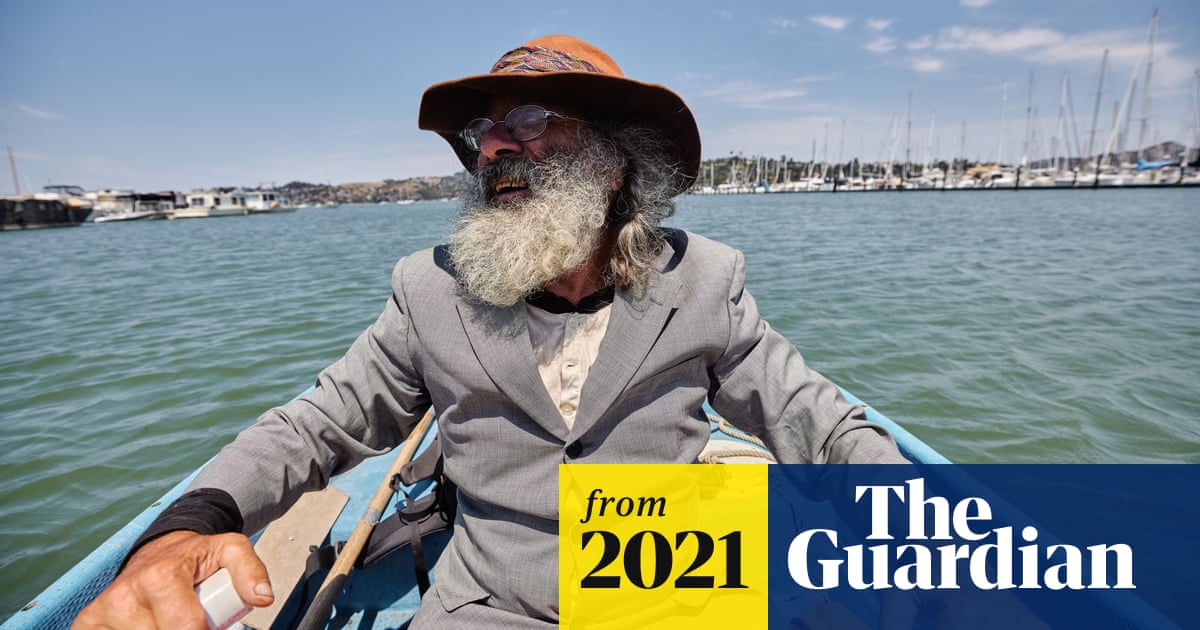
Now that you've heard a bit about the drama in California as the wealthy and non-wealthy battle to live as they wish in a state beset by fires and doomed to earthquake disaster, let's see how things are going on the opposite end of the spectrum from the billionaires and Bolinasians. Look up Sausalito on Google Maps (but don't go there, we've covered Marin County) and you will see dozens of shadows of boats anchored in the waters off the shore from the harbors. These boats, relics of earlier decades when possession of boats and homes traded more freely from hand to hand, have long been serving as housing of next-to-last resort for people priced out of living on the land.
But, un-managed off-shore housing of next-to-last resort, convenient as it may be compared to the alternatives those who occupy the boats face, is not as tenable in hyper-environmentally-conscious-gentrification California as zero-development Bolinas or the Grove. Instead it represents the opposite - a community that can't obscure itself away from attention and scrutiny, that has no ties or leverage to extend to the authorities that exercise authority over it, and where the status quo is some level of visible environmental damage, not an absence from it. Which is not to say Bolinas or the Grove have less impact on the natural world than these boats do - what is the environmental impact of the private jets and SUVs that bring multi-multi-millionaire-not-gay Bohemians to the Grove every summer? If Bolinas is so inhospitable to development why not abandon it to nature completely? What's clear is the people who live in these boats on the bay are totally disenfranchised and are literally watching their homes be crushed in front of their eyes.
I found out about this community from a tweet I saw where someone recounted helping a Richardson Bay boat resident to get medical help after hurting their back. Knowing that their home would be subject to confiscation and destruction, the resident was in immense, immediate distress, torn between keeping a life and home or their health. It's so immensely unfair.
 Ken Klippenstein
Speaking of the Bohemian Grove, Ken Flippen Klippenstein calls out that a leaked membership list of the Grove was one story he found to be objectionably held up by editorial / managerial staff at the Intercept, leading to his departure. I for one would love to see this list, so I know who to suck up to.
On the flip side, Ken cites concerns managers had about protecting sources, which is kind of important when you are the outlet whose sloppy work landed Reality Winner in prison for four years (please read Bottom's Up and the Devil Laughs by Kerry Howley, who's profile of The Hube I previously wrote about). The only conspiracy theorist I even remotely think of trusting, Matt Farwell of The Hunt for Tom Clancy, thinks Ken may be a government plant because his dad works for the DOE at Argonne Labs. But I, a rational Illinois native, recognize Ken is a government plant because he went to Wheaton College.
In the world of Business
 Matt Stoller
Matt Stoller has written a book about monopoly power in the US called Goliath: The 100-Year War Between Monopoly Power and Democracy and is writing the BIG newsletter to draw more attention to the anti-trust work being done in the US. This article caused some buzz and some classic WSJ tut-tuts. Pretty much, a Texas oil guy cut a deal with the Saudis/OPEC to push prices for oil up when they should have been in the dirt, to protect the financial viability of the US Oil companies drilling for new oil. You might be thinking, but shouldn’t we be trying to be less dependent on fossil fuels? To which we laugh at you dear reader you sweet innocent babe.


Paying poor old people some money now in exchange for all their life insurance money later is big business actually. Turns out, many people can't afford life insurance premiums in their old age, or a nice place to live, and $150k in exchange for a signature is a hard deal to pass up. This is a craven example of the tactics we allow in the pursuit of % gains on spreadsheets for people who could live on the giant boats they own but don't.

Paying young people some money now in exchange for very long hours on the promise of all the money later is another classic scam. Leo Lukenas III left behind a young family. Hiring a 30-something ex-Green Beret is indicative of the types of people banks select for: high pain tolerance, willing to employ violence, low morals to money ratio. That instead of taking care of their golden children banks treat them like crap should make it clear to everybody how we all must claw the decency in our lives out of the hands of those with the power to dispense it.
 Edward Zitron
Speaking of low morals to money ratio, Google is pretty much a morals/money exchange for smart people. Ed Zitron, PR guy turned big tech critic, points the finger at a particular individual for the ad-ification of Google Search. Not giving credit to his claims, which don't seem based on any conversations with the people he talks about, it is a curious look into a timeline of events that played a role in my career. My first job out of college was at a website-company that gamed Google Search results by any means possible, including by adding lots of spammy articles like "how to delete your Instagram" to the site to get more traffic and thus game the algorithm as much as possible.
Google is pretty much the only search engine regular people use for business stuff so businesses have a strong incentive to do "SEO" (search engine optimization). Which is most realistically accomplished these days by creating as much content as possible that is tangentially related to the things your business's customers search for on the web that relate to you, and jumping through as many hoops as defined by Google in periodic published sets of best practices for web developers to follow - things like, include links to other authoritative web sources in your content, make sure to fill out the metadata for what you write, etc etc. Gaming the search results to show up first/higher is big business because it requires a bunch of precise, gardening like work of generating webpages that eventually bear fruit in that your website comes up when people search for it, without you needing to just pay Google to make that happen. Of course Google would like you to just pay them to make that happen.
Very recently Google began rolling out more changes to search, adding an AI generated search result summary at the top of the results, to drive people as far away from actual good web content as possible and generate more revenue from them by nudging customers towards ads they auction off to the highest bidder.
Closer to Home: Chicago News and Commentary
 Kerry Cardoza
Schuba's open mic is a not insignificant part of the comedy scene and these venues and brands are all just out there continuing on despite this guy's creepiness. To me there is a pox on the places until these victims get the justice they deserve.
 Casey Toner
Remember that network state silicon valley weirdo who wants to ally with cops? Here's what this looks like in practice. In Illinois, becoming a police officer isn't so easy. You have to make it to age 21+ without doing anything to disqualify yourself. You have to get some education or join the military, pass some tests and maybe an academy of some kind. You also have to want to be a police officer, which given it doesn't pay much for the crap you put up with and comes with a ton of personal responsibilities and risks, doesn't leave a lot of people. Most jobs do not involve distributing upon people the worst news of their day/week/month/year/life so far or interacting with people at their absolute lowest points, but these are core parts of the job for cops in our safety net free society that encourages people to drop out into incarceration by the millions. Given you have to be crazy to want to be a cop we shouldn't be surprised almost nobody wants to be one. Now this story reveals the brutal underbelly of our Certified Crazy Policeman world - where poor police departments pay so little they claim to only be able to afford to hire the rejects falling off the heap.
If there is anything positive to say about the police, it is that despite whatever they do outside of their job, they do, sometimes, respond to horrible incidents during and right after they occur, investigate horrible acts of crime, find responsible perpetrators, and render them to a system of justice. Reforming the police has to come from an understanding that this is the only job we must entrust to police. Not "preventing crime, "protecting the peace", "getting guns off the street" or "taking it to the bad guys", or "playing the role of good guy police guy in a way that fits our image". Unfortunately, we tell cops their jobs are all of the above, especially that last one - maintain a good image of "cop", keep wanting to be one, and you can keep getting hired even if the image is just a facade. Now that our police departments' duties range from "rent-a-cop" BS security guard sit-in-car-at-location-with-gun to isolated special ops SWAT truck go-hards felony warrant person nabbing squads, and our streets are flooded with illegal guns and drugs, we've already created the protected class of Good Guy Police the Silicon Valley autocrats want.
 People’s Fabric
As CPD and ShotSpotter beg for the continuation of the ShotSpotter contract, People's Fabric digs into the data they provide as justification and finds issues aplenty. It's clear a central problem with CPD is totally unaccountable leadership who refuse to enact changes to systems and practices of the police when it comes to record keeping.
Is ShotSpotter bad technology? That depends. Investment in law enforcement technology is a weird business that resembles how football teams procure equipment. Specialty law enforcement vendors make products like bodycams, Taser, ShotSpotter, or spike strips that pop fleeing cars' tires, which get pitched to equipment managers at conventions and product demos and in videos from other departments when the products are used and work. Because these products will be subject to scrutiny when the police buy them, when they are used as evidence in court, and when they then hurt or kill people using them (or get hurt/killed themselves), there is a big incentive to capture the market with one player that can soak up liability while extracting maximum profits.
These products are marketed as easy solutions to problems for the police, like people running away or resisting and hurting the police or other people in the process, or police not getting alerted fast enough to crimes to respond effectively. Unfortunately, the widespread introduction of these products to police departments also seems to have a tendency to escalate everyday policing. Subjects of police action now recognize from the same commercials that get chiefs to buy these products that they can be Tazed, their fleeing cars spiked, their gunshots recorded and police automatically alerted to the location of the fired shots. They adapt accordingly, working harder to elude law enforcement and stay one step ahead as techniques to combat these quick fixes proliferate.
And - law enforcement resources get sapped by these expensive solutions and the need to defend their purchases - now a priority for every police office investigating a shooting in Chicago is to tie their response to the use of ShotSpotter, even as much or more than to find the perpetrator. The result of this is a deepened our side-their side perception by law enforcement of the people they police, as they stride further and further away from depending on collective, community based methods of policing (building community trust so people come forward with information about crimes, enlisting the help of the communities to keep themselves safe).
If the ShotSpotter contract does expire without renewal, it seems unlikely ShopSpotter will remove the hundreds of microphone sensors installed around the city. Their plan was to become a ubiquitous, necessary tool of modern policing. Unfortunately, partnering with the CPD in an attempt to capture the market may have backfired if the City ends up walking away from the agreement because CPD cannot keep an accurate enough record to tell if the system works.
 leannaseymour
Pulitzer Prize winning investigation of, you guessed it, the Chicago Police Department. Telling people coming into police stations they need to wait 48 hours before they can report someone missing, then turning around and literally filming the show First 48 talking about how those are the most critical hours is just evil. Finding missing people is just one of the many blatantly broken, clearly corrupted processes at CPD that leaders are too cowardly or incompetent to change.
 Lee Bey
CST's Lee Bey takes on the Mayor-Bear alliance shaping up around the proposed new lakefront stadium. This alliance is pretty indicative of the Mayor's shaky political footing. Without solid ground to stand on, he seems to go with whatever the money and power needs the Mayor to be today. The Bear's need the Mayor on their side to build a stadium for cheap, and the Mayor needs literally anybody on his side.
 Anna Hensel
What went wrong: an investor and executive class made a bunch of decisions about the business based on anything but reality. When your company missed a sales goal you set by 35 million, quit your job and go teach P.E. This blog has touched a lot upon how accountability gets shifted off of the rich and powerful, and Foxtrot is a perfect example: a rich investor class assumed either all of or very little of the risk involved, depending on how you look at it. They set a course for a business that doomed it to failure, and hired executive after executive to assist them in pushing the boulder up the hill. When the executives and investors stepped out, closing all of the locations in the middle of the day via email, the boulder rolled down and crushed all the people helping push the boulder up. Up at the top, the investors and executives walked away, pocketbooks largely unharmed. Now, the founder is even involved in the effort to scrap back some locations from the ashes of delinquent rent and bills (and the goodwill generated by laying off all your staff mid-shift).
 Jamie Nesbitt Golden
This is why I love Block Club. I had no idea Chicago had such a center of Black tennis history in American history in this hidden club and courts in Bronzeville. The club is asking for money to resurface their courts, a worthy cause I will be contributing to and encourage you to join me in supporting. Block Club hires expert journalists from the neighborhoods to report hyper-local stories like this. Jamie Nesbitt Golden also has proved to be one of the best follows I have made ever on Twitter to be informed about Chicago.
Deeper Reads
 Jessica Purkiss (Lighthouse Reports), Fahim Abed (Lighthouse Reports), Kevin G. Hall (OCCRP), and Andreas Cosma (OCCRP)
What did we spend all that money in Afghanistan for? Wonder a bit less, some guys got rich! Talk about the big con.
"Between the U.S. invasion of Afghanistan in 2001 and the withdrawal of troops in 2021, Washington spent about $141 billion on efforts to stabilize and rebuild the country, according to the Government Accountability Office, which reports to Congress on federal spending.
The sheer volume of money being pumped into the country, paired with the challenges of vetting contractors and subcontractors, created a system that was ripe for exploitation.
“In the past 20 years, Afghanistan has seen the sudden emergence of millionaires and billionaires,” said an Afghan anti-corruption expert, who lives in Afghanistan and asked not to be named due to fears for her security.
“Those who were awarded contracts were often parliamentarians, ministers, or individuals closely associated with high-ranking government officials including the parliamentarians, ministers, vice presidents, or the president,” she added."
But you just keep working that day job.
 Julia Lurie
I read about Delancey Street Foundation in this blog post by programmer Nathan Marz about the founder, Mimi Silbert: The Greatest Hacker in the World.
Sounds pretty good - but this Mother Jones article digs into the DIY approach to human life reform Silbert and Delancey Street undertake when people get diverted from prison and into the program. It's cult-like. Does it work? For some people. Should it be the only alternative to prison? I think this article does a good job laying out the reasons why Delancey Street is both better than the alternative of prison for people but also a stifling force that rode a path of goodwill and luck to become the only alternative to prison some people in California get. If someone today wanted to do what Mimi Silbert has done, but better, could they even get started?
Jeremy Schulman
Heartbreaking.
"Like all suicidal mass shooters, Elliot Rodger lacked hope. The fundamental importance of that echoes in how his mother cultivates her own resilience. Volunteer work is part of it. After Russia invaded Ukraine in 2022, Chin went on two trips with World Central Kitchen to Poland, helping to feed refugees fleeing the war. It was a powerful and humbling experience for her, but she says violence prevention has remained her strongest calling."
 Sharon Lerner, photography by Haruka Sakaguchi, special to ProPublica
Scary stuff. I guess I have these in my body? I am hoping the class action Venmo payment is huge for this one. All jokes aside, you should at this point in the blog be very afraid that the people who have caused all our problems are sitting and dying in lakehouses somewhere at the tail end of long happy lives, and they will never face any accountability for what they have done, and it will be much harder to go after them for money when they die and pass it all down to their kids.
Hearing
TOO FAR POD: The State of the Pod
Okay I think I mentioned Too Far in a previous blog as well. This podcast, in which Robby Hoffman (legend, hero) and Rachel Kaly (who opened for Conner O'Malley's special taping) truly battle it out. What is this podcast about? The making of the podcast and the extreme difficulty it is causing them. Is it scripted? No, they are just like this. How is that funny? You gotta listen to find out. I learn I feel so much about myself and how I process the world from listening to these two do it.
The Spectacular Failure of the Star Wars Hotel
Okay this video is 4 hours long. Too long? Not long enough? I love listening to stuff like this, checking in when it sounds interesting, and this lady truly takes us for a ride as she goes through every detail of Disney's crazy attempt to make a hotel in Space in Florida.
Thinking
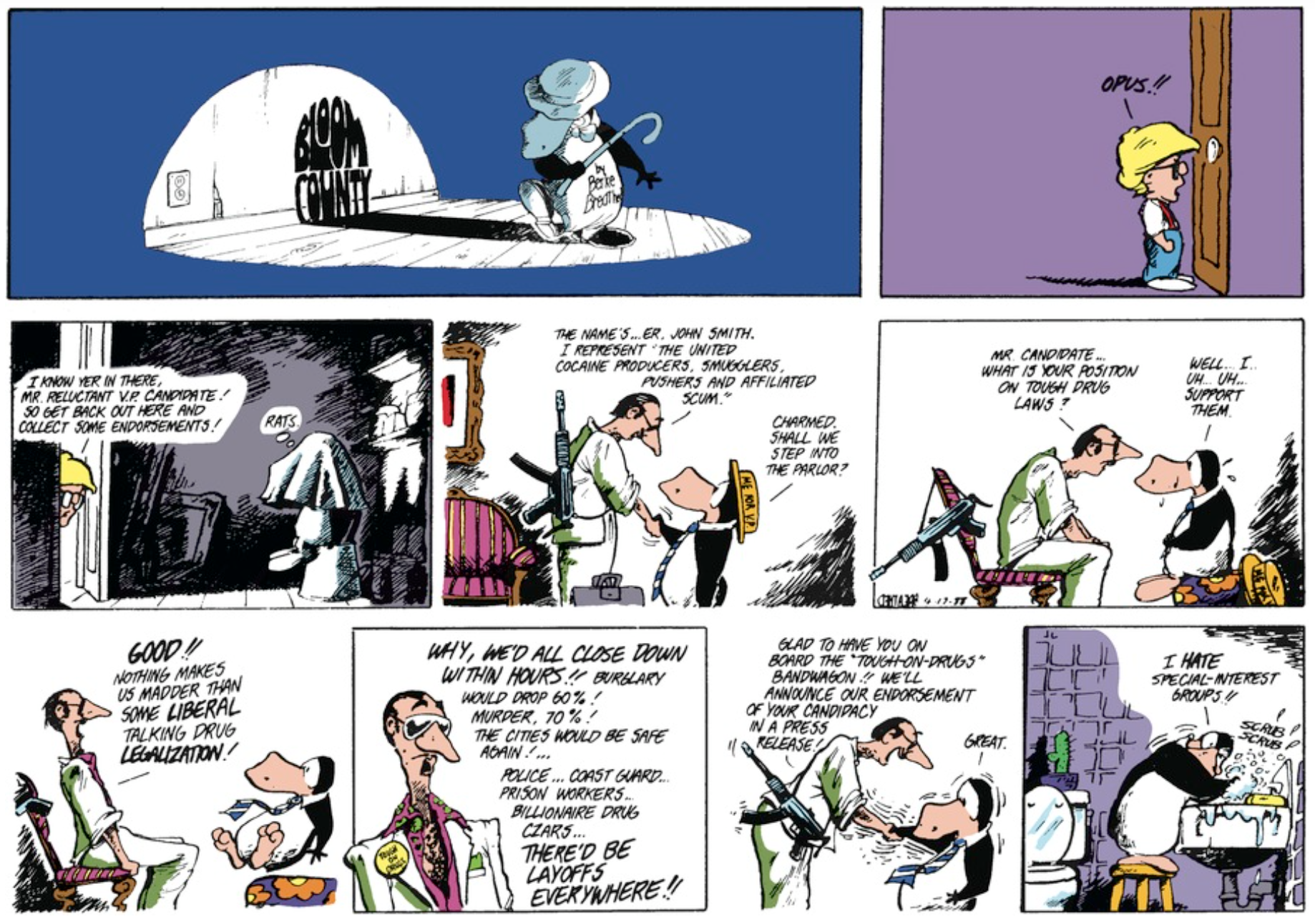
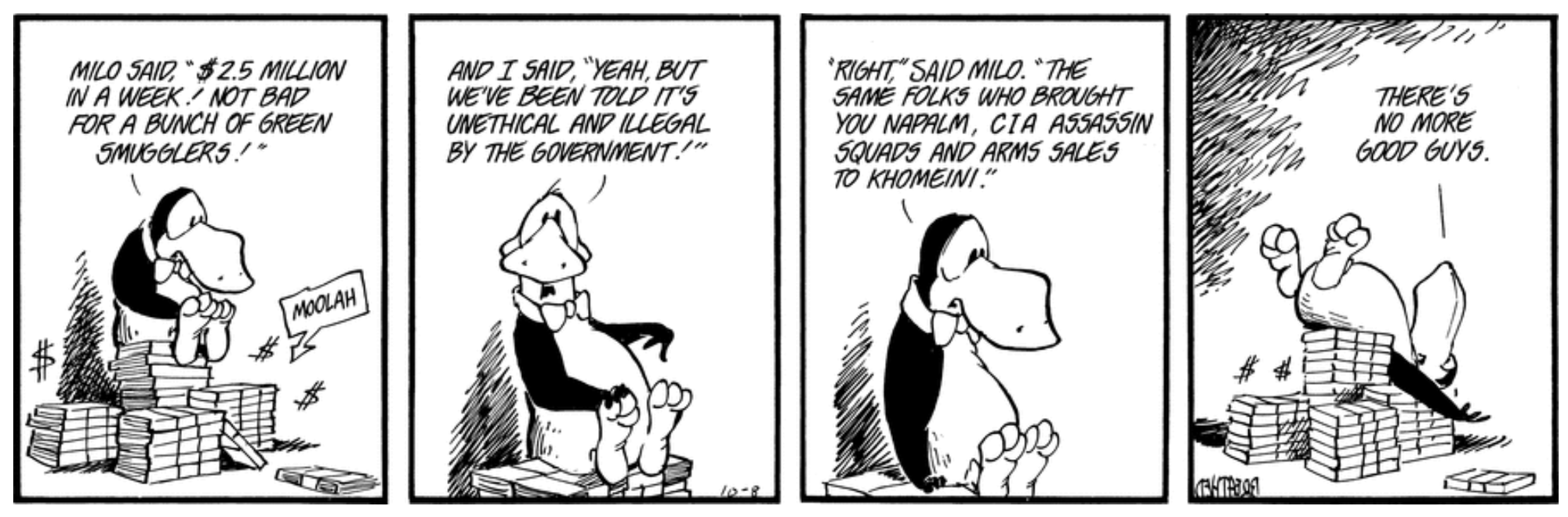
blog: may 6 edition. update may 19th edition update may 22nd edition….okay last update may 23rd edition
Conner O'Malley, graffiti, consulting cons, Californian exclusionism, the world's greatest scams, Chicago round-up, deeper reads, listens, and more! it's a big one...